Showing posts with label History and Nostalgia. Show all posts

Tuesday, April 17, 2012

'The Bob' - a brief history

I’ve been threatening, promising, vocalising, whatever you’d like to call it, to cut my hair into a bob for about 5 years.

It was going to happen when I was 30. It didn’t. And then this year, I did the canvas with my girlfriends on styles and it was decided that yes – it would happen this month. It hasn’t.

I find myself googling ‘the bob’  and ‘finger waves’ often (I loved Tilly Devine’s on last year’s Underbelly show).  My subconscious is still living in the 1920’s. Finger waves are so gorgeous don’t you think? Insert the lovely Coco Chanel.

And Tilly -  I doubt she's happy with this photo of herself. Hair looks great though.


I came across this website that talks about when ‘the bob’came into trend. So interesting – have a read and if you can’t be bothererd this is it in a nutshell:

Bob’s came into vogue in the 1920’s (Coco Chanel had a bit to do with it catching on)

Hairdressers of the time were only familiar with curling layers of long hair into elegant upstyles – cutting it off wasn’t their forte. So women had to visit barbers to get the chop. This annoyed the men no end forcing them to line up behind the women
Men divorced women over the bob! Honestly. What a stupid reason, particularly if your bob looked like this one.
In New York City 2000 heads per day were being ‘bobbed’ in the early 1920’s. 2000!
There was outrage in 1925 when the Shingle Bob was introduced (worn by the flapper gals, it’s a concave super short tapered cut shown in the bottom of this advert below) because parents claimed they couldn’t tell their offspring from boy to girl from the back.
Queen Mary was NOT a fan. So she requested that women conceal their cut with hair additions at court functions. A lot of women saved their cut locks in order to add them back on for particular social engagements.
Queen Mary looks like she has a bob in this picture i think...
Very interesting indeed. There’s a bob fan page I stumbled across would you believe? Oh, and the bob is the reason the bobby pin was invented. Ha-ha. There you have it. I often wondered that myself.

Admire some modern bobs of today if you're toying with this very idea yourself.
 
(p.s. katie's bob is the style 'we' (the girls) decided on for moi... )


A change is good as a holiday … or say they say.

Monday, July 25, 2011

Old Bookcase

I’ve bought something (which is a little more original than my post title...) This is it.


Well, that’s part of it. Pictured is a 3-piece bookcase which I’m told came out of a bank which was estimated to have been built in the 1920’s.

It has gorgeous roller doors that are in great working order and originally, grip handles were cut into the wood to slide up and down. As the story goes … there was much outcry by the secretaries due to perpetual broken nails so steel handles were added somewhere in the 40’s and have been attached ever since.

On initial inspection I was going to remove the handles, but I love the stories that make up a piece’s history so they’ll stay as is (whether it’s true or not…) The one negative is that these bookcases were built for the books size of the day – which is little. They’re not very deep. Thankfully ‘A’ loves reading second hand biographies and our encyclopedia collection from memory is old so that’ll fill up some of it.

I have a bank of 3 which is pictured and another bank of 2 which are constructed and just need a little bit of love. I could have them professionally restored but I like their imperfections and lack of polish. I’ve measured up the office and they fit harmoniously on two walls (so the measuring tape states). There are another 2 that have not been constructed yet, so we have some work to do. We’ll either keep them in storage or sell – so stay tuned if this kind of thing tickles your fancy.

Monday, February 28, 2011

cloudland ballroom

I was visiting with my Aunty last week, this being my mother’s sister. She’s 13 years older than my mum to the day. The three of us were chatting, and seeing that I love to hear about ‘the old’n days’, we started to talk about various stuff.

The first being how rubbish used to be collected. I know, unlikely topic over a cup of tea and cake. My Aunty talked about how fit the rubbish collectors always were as they jumped over fences into each yard and ran the bins out to the trucks. I remember it too. My mother said that every Christmas they would leave a few tallies (big bottles of beer) for each garbage  man by the front door as a gift ... good ole beer.

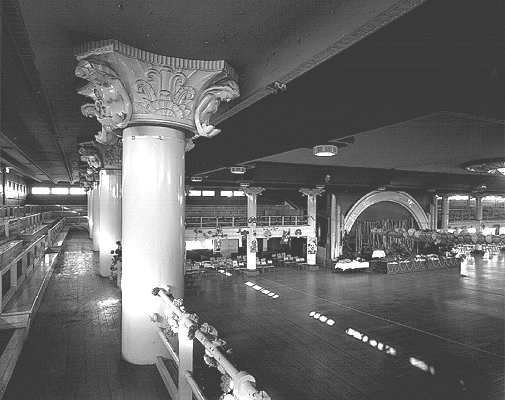
The next topic was Cloudland. Well, you should have heard the girls … like two little birds in a nest.  Both of their faces lit up. Mum chirped on about who and how many gents used to ask her to dance and my Aunty tweeted about the atmosphere and how completely and utterly fabulous it was. This is it pictured below. Loving the palms lining the columns. If only I could find some colour shots.
It had chandeliers, hard timber floors, elegant curtains, domed skylights (as you can see above) and decorative columns. The Upper level had seating so you could watch down over the dance floor, this being another draw card for its popularity to hold concerts  … and a  handy viewing deck to spot potential beau's

What an enormous room 


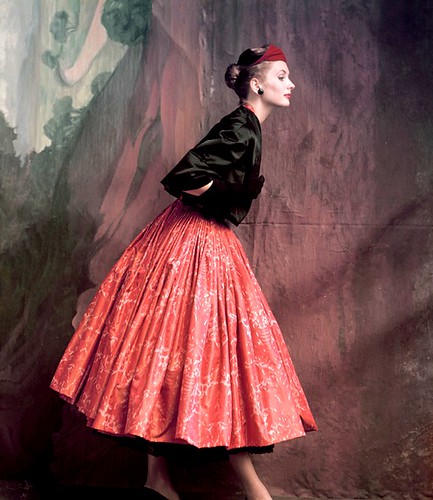
I wish I could dance like that, how romantic, elegant and thrilling to be in the centre of that ballroom twirling around. Let me just daydream a sec ... so if i could jump back in time and hit that floor in the 50's I'm fairly certain that i would choose to look like this 


Wearing something along the lines of this
this
or this ... i'll have the car too
And dancing with a man that looked liked this
Who would then take me away to Paris so I could wear this
just had to work that last pick in ... love capes, and could Jon Hamm be any better looking? I don’t think so. Spunk Rat 220%!

Built in 1939-40, this magnificent piece of Brisbane history was originally named ‘Luna Park’ with the original intention of building a fun park to the side of it.  Built high on the hill at Bowen Hills, an ‘alpine railway’ was part of the design which would run up the hill from Breakfast Creek Road and would deposit passengers to the rear of the ballroom. With WWII breaking out, the premise was used as an American Military base and re-opened in 1947 as ‘Cloudland Ballroom’ and that is how it stayed until 1982.  I read that in 1948 Laurence Olivier and Vivien Leigh visited.

The Ballroom could be seen from various suburbs across Brisbane with the arch being illuminated at night. It was 18m tall. The ballroom was the host to thousands of dances and arguably the best ballroom and concert venue in the country. Buddy Holly being one of the main acts to grace it’s stage amongst many others.

It was also used for students to sit their Uni Exams for many years.

Although there were protests and strenuous calls for its preservation, Cloudland Ballroom was demolished by the notorious Deen Brothers in November 1982. The demolition took place despite there being no permit. It happened in the still of the night with not a word of warning.  By sunrise all that was left of this incredibly significent building was rubble.

The street’s were conjested and lined with destraught people who could not fathom that an icon could so quickly disappear.  

As people reminisce, they talk about a time when the street’s were safe to walk home. Women were wooed and courted, couples danced together, close, in unison with the music of the big band. If there’s one thing my Mother says as does my Aunty, it’s that those were the good years. The 50’s/60’s/70’s, were, simply put - the best. I wonder if people will feel that way about the 90's and 2000's? What's our icon?

Wednesday, February 16, 2011

spring hill

I was eaves dropping on a convo being had between a guy I work with and his partner where they were trying to figure out why Spring Hill was in fact called Spring Hill. Was there a Spring?  
Hmmm, interesting thought … ‘was there a spring’ i then pondered? With the magic of Google, I found out. Most of you may know this ...  but ...
... yes, indeed there was a Spring which was situated just up the hill from Brisbane’s settlement back in the 1800's. I read that this spring turned into a creek, hence the naming of ‘Creek Street’, and was Brisbane’s first fresh water supply. This picture which I found shows Spring Hill in the very late 1800’s. Who would have thought it would look like that then?
 

The suburb is one of much age compared to other areas of Brisbane. Convict built buildings and so many darling little workers’ cottages line the narrow streets. It would have been so interesting to walk around those streets a century ago.
Due to the water access at the top end the more elite properties were built high, with the poorer dwellings in the lower areas.  Much of the older homes and buildings have been demolished and replaced with more modern structures over recent times. I drive through there often and look at the homes and there are still plenty of lovely properties screaming history.
And then there’s the Mill. This picture is up on Wickham Terrace - not sure when, but a loong time ago.


The Mill, built in the late 1820’s, is the oldest surviving building in Queensland. Brisbane was originally established as a convict settlement in 1824 which was then moved to North Quay later. I suppose that may be why all the courts are based at North Quay? …

The mill was the flour supply for the settlers and was used by the convicts to grind grains like wheat and maize which was done by a treadmill with wind powered sails, it was then converted to an observation and signal station to Fort Lytton and the Port for ships, and then in 1862 it became the 1st home of the Qld Museum. Versatile Mill.
This is is today.
Another historical land mark in Spring Hill is the ‘Spring Hill Baths’ on Torrington Street which are the oldest ‘Baths’ in Queensland having opened in 1886. I have only ever been to the Valley Baths, but being that these have almost all of the original characteristics (so they say) I think I’ll pop in for a visit. Nothing like a bit of nostalgia.
That concludes my history lesson. Long story short … there was a spring in Brisbane’s Spring Hill.

Thursday, January 27, 2011

The Book of Household Management - circa 1891

Anyone who knows me knows full well that i am a hoarder ... My father used to blame it on his mother and as the years go on it becomes increasingly clear that it is fact directly from the man himself. These days, we tend to talk more about what little items of gold we've come across in our own houses. The big fella has some fairly cool stuff - if only i could pry it from his fingers.  I recently borrowed a book from him that was his great grandfathers, this is it below.

'The book of Household Management' by Mrs Isabella Beeton. Published 1891 ... and i'll have you know that it's the 'entirely new edition, revised and greatly enlarged'! I near on need a microscope to read the writing. Teeny tiny.

As you can see it is quite comprehensive for those that work in the household. It has delectable sounding recipes (several hundreds) like Stewed Ox Cheek and Fried Ox feet or Cow Heel. It summarises different breeds of animal so you know what your eating which i found ... different. This is not an area of the book for the vegetarian. Quite adorably my father has popped a couple of post it's on the pages of food he plans to make. I dare say this'll be when mum's away and he's home alone with only the dog having to witness it.
Venison anyone?

What i find the most interesting is the etiquette area. This fold out at the front of the book pictures how to set the table. The book commences with the most indepth outline of how the Mistress must run the household. It talks about all manner of things including when visiting is permittable and how 'one' should behave... "there is much danger and impropiety in expressing opinions of those persons and characters with whom, perhaps, there is but a slight acquaintance." "during these visits the manners should be easy and cheerful"

There is extensive outline of how the mistress conducts herself when hosting a dinner party, i've been enthralled reading it. Completely another world. This is the paragraph under 'Leaving the dinner table' at a dinner party . If only i could share it all, but this one's a stand out ...

When fruit has been taken, and a glass or two of wine passed round, the time will have arrived when the hostess will rise, and thus give the signal to the ladies to leave the gentleman, and retire to the drawing-room. The gentleman of the party will rise at the same time, and he who is nearest the door will open it for the ladies, all remaining courteously standing until the last lady has withdrawn. Dr Johnson has a curious paragraph on the effects of dinner on men. "Before dinner" he says "men meet with great inequality of understanding; and those who are conscious of their inferiority have the modesty not to talk. When they have drunk wine, every man feels himself happy, and loses that modesty, and grows impudent and vociferous: but he is not improved, he is only not sensible of his defects" This is rather severe, but there may be truth in it.

Severe? You think!

Everything was so unbelieveably structured complete with the order of the day written on a board for the family and servents to adhere to.

I find it so intriguing - it was respectful but disrespectful, elegant and refined but high maintenance and extraordinarily judgemental. The mistress provided the most extravagant dinner's (or project managed the servants)with the finest touch, and would in turn be secretly condemned if the meal were a flop or her hosting duties not up to standard. Most stressful sounding indeed.

The book goes into SO much detail. It also summarises different forms of cooking from around the globe and 'Sanitary, Medical and Legal Memoranda'. Medicines and first aid and how to write a will etc. Here's an example of  the 'Method of restoring the apparently drowned'

This book is huge, so i've not read it all. Just the interesting Mistress parts. There's little poems throughout to express certain points. Dad's been asking for it back this week. Maybe he needs to learn how to 'dress a sheep's head'. Mmm delish.

Tuesday, January 25, 2011

the piper of dreams

This print by Estella Canziani was an unexpected find ... at the Salvos in Ipswich. I saw it on the wall amongst so many other prints and there was just something about it.

The more i looked at it after purchase the more smitten i became. It's so whimsical without being too fairylike. Fairies ain't my thang. I then did a little research and discovered that it was a well known and famous fairy print of the early 1900's.


See the little robin sitting on his shoe?

Estella Canziani was born in London in 1887 and was an artist, interior decorator, travel writer and folklorist. This was her most famous watercolour which made its first appearance in 1915, a year into the Great War.

In the first year this print sold more than 250,000 reproductions and is believed to have been so popular because it offered an escape from the goings-on in Europe during that time - many were sent from loved one's to their men in the trenches during the war. 

It's framing is aged and the cardboard border is showing that rusty kind of age mark paper gets, but it still has a good feeling about it.

Tuesday, November 9, 2010

"No Matter where i serve my guests ...

... it seems they like my kitchen best."

A little plaque that's been on the family kitchen wall since i was a kid and it's my topic for today.
The kitchen --- Kitchen 'Room' vs Open Plan.

I have an open plan kitchen, and i'm afraid to say that i despise it. 100% do not love it at all. Firstly, i get so tired of keeping it perfectly dish/smudge free and clean and secondly, it's rediculously hard to get a good design flow on with it in the picture ... which it is, from every angle!

I want a kitchen which is more old school style. I connect many a fond memory to it as a child growing up. I hate seeing my dishwasher from the lounge room and fridge from the dining. appliances are terrible unattractive.

A history ...
Way back like early 1800's the kitchen was still centred around the fire place in many cases and was the room of the house that the family would congregate. Those more 'flush' decided that the preparation and serving of meals was beneath them so kitchens were banished out of sight. Further into the 18th century houses with separate dining rooms became more common with kitchens designed  at the rear of the home (or basement) with adjoining back steps to ensure that the servants were unseen.  I'm guessing that over time, this design of having the kitchen at the rear of the house just carried on in properties in the late 19th century and early 20th, your pre-war's - queenslanders, colonials, manors, plantation homes etc etc.
This is a kitchen out of an 18th century barn - since refurbed slightly - you can imagine it before the more modern island bench.
Kitchens became smaller late 19th century and after WW1 servants began to peter out and seeing there were no longer maids to carry the food from room to room, people chose to eat in the kitchen again, hence the commencement of the 'kitchen table'. 

Then, jumping forward into the mid 20th century and the age of consumerism, the 'housewife' emerged. Many woman who had worked throughout the war were enticed back into the home (through very clever marketing campaigns) and the kitchen became her domain more than ever before. Brand new appliances to rival that of any other housewife's kitchen were a necessity and a larger kitchen was conceived. Convenience, efficiency and perfection in the home was the undertone of the era with constant upgrades of items created to better that of the one before.  More open plan kitchens were designed - as in, still viewed as a separate room but larger and outfitted with a kitchen table or booth - with special occasion dining still reserved for the formal dining room.
Our family home was early 1900's so the kitchen is at the rear, smaller style but we always dined in there as a family together and still do when i visit mid week. We'd talk together, listen to our parent's stories of the day and were 'guided' on how to use a knife and fork and chew "...with our mouths closed!!!". Each night one of us would be on dish duty. Regardless of the fact there was a dishwasher, this was simply a part of the process. Saturday nights were roast night, in the formal dining with AM radio in the background and 'sweets'. generally whatever the middle child wanted being that he's the favourite ...

Dinner parties that were held would see everyone congregate in the kitchen for a chat and then adjourn to other areas of the house. There was always a constant hum of conversation in our kitchen.

It was also a workspace and a getaway for woman during an era when men were so unashamedly chauvenistic. The venting room. Now it's their getaway from us ... mwoooaahahaha. That's not true. The shed is.
I found this on the internet from 'Mens Night In the kitchen' 1951.
Now in the modern age of more convenience and unecessary gadgets, it's still the centre point of the home ... for me, it's just not the same with open plan. Stools at an island bench are uncomfortable. I'm a lounger. Open plan, as we know it, is appealling for the intention of creating a more inclusive way of entertaining but i still love a home that offers a discovery - what's around the next bend? Our current home can't offer that. It's too long and narrow - what you see is what you get and it suits, and it is convenient but the cosiness of a room that creates the family meal of the day, whether it's 2 of you or 5 of you is something rare and very special. A certain time of the evening, families up and down our street would be huddled around the kitchen table enjoying eachothers company. So my next home (and it will be an argument) will have the kitchen designed as a separate space.

Whether we agree on this or not, here's some 'kitchen rooms' i like the look of

Thursday, November 4, 2010

the culprit

As i looked at bits 'n' pieces earlier i stumbled across this:
Now i know why there's always so many layers of vinyl floors to pull up in old kitchens! They ad-ver-tised it!!!!!! 

This is a fine example of the 1950's well and truly being the 'age of the consumer'. Out with the old - in with the new. Just cover that flooring up when you get over it. I mean, obviously, if you can get away with layering it you would, right? ... look how easy it is ... and a woman can do it!

Yep, this ad would've got me hook, line and sinker people.  I'd be all over that vinyl like a rash ...changing it up annually if not - seasonally.  There's much to love about the 50's.

Wednesday, November 3, 2010

torbreck

This may be a little left field, but i've had this building on my mind for a long time now and found myself stalking it again today on the internet.

There's many things i love about Torbreck, but mostly the fact that it was the first residential block in Brisbane. Apparently, in the 60's and 70's it played host to the 'creative community' and i do feel jipped that i wasn't around to be a part of it. Set high in a suburb i have been in love with for toooo long - Highgate Hill - i often find myself daydreaming about what it would have been like living there back in 70's. How utterly fabulous.
Building was completed in 1960 with the majority of units sold off the plan prior to completion and a number of penthouses custom designed as well. Budgeted to cost ₤750,000 pounds i'm quite sure it's final cost was ₤1million. Set on a 1/2acre sloped block, it's broken up into a unit tower and then a low rise 'garden block' consisting in total of a whopping 138 units in total.

This was a massive turning point for Queensland and Brisbane with a design that was very forward thinking. Automated lifts were installed which had people gasping that it were at all possible. The detailing is the main reason i love the place. There's tiles everywhere in different colours and varying styles .... cavity brick features on many exterior walls
this detailing up the centre, love, love, love. Reminds me of stacked besser brick feature walls in pool area's from the 50's and 60's.
So much was considered in the design of Tobreck. Every unit has a built in planter box on the verandah to encourage vegetation and with the positioning of both buildings, each unit receives an abundance of natural light.  Climate control was a particular area of focus with louvres and shades installed to protect certain units from sun and weathering whilst still increasing air flow and maintaining a beautiful  suburban or city outlook ...

Well, so they say anyway. I read a case study on it a while ago - so i assume the person writing it is actually correct ...
a couple of historical shots. It caused quite a stir as you can see below. During the building of it there were viewing decks for people to watch it all unfold as well.
Well it's certainly a piece of history and another topic i could ramble on about. It's just annoying that such a minimal amount comes up for sale. The units are small, but with so many communal areas and a location that not only overlooks everything but is also close to everything - who cares. She's not the most stunning to look at from some angles but she's a stayer ... if those walls could only talk ... there'd be a tale or two ... oh yes, and it'd be bloody interesting!!

*Pictures all courtesy of the website www.torbreck.com.au - check it out!